Showing posts with label tribal fashion. Show all posts

Thursday, February 3, 2011

Let's Talk About Pendleton

(look from Pendleton's new "Portland Collection" for Fall 2011. Source here.)

Last night I was cold. So cold, in fact, that I had to pull out not one, but two, of my Pendleton blankets to add some extra warmth to my bed. As I shook them out and laid them on my bed, I thought about how special these blankets are to me--one was a graduation gift, the other a thank you gift for serving on a panel about the "Future of Indian Education." In many Native communities, Pendleton blankets are associated with important events, and have been for hundreds of years. They are given as gifts at graduations, at powwow give-aways, as thank you gifts, in commemoration of births and deaths, you name it. In addition, I've always associated the patterns with Native pride--a way for Natives to showcase their heritage in their home decor, coats, purses, etc. There's something just distinctly Native about Pendleton to me.

(Stanford Native Graduation from a couple years ago)

But recently, Pendleton prints and fabrics have started popping up everywhere. It started with Opening Ceremony's Pendleton line in 2010, and now Urban Outfitters has started carrying a Pendelton line, celebrities are wearing Pendleton coats, and Native-themed home decor is apparently all the rage. Now Pendleton has announced their newest collaboration, The Portland Collection, which fashion blogs are proclaiming will be the big thing for 2011.


So what's the problem? I openly admit that a lot of these designs are adorable, and I would fully sport them (that bag! I love!), if I had a spare $1000 or so. I can't cry straight up cultural appropriation, because...well, it's complicated.

Pendelton has been supplying Natives with blankets and robes with Indian designs since the late 1800's, which the "history" section of their website outlines:
A study of the color and design preferences of local and Southwest Native Americans resulted in vivid colors and intricate patterns. Trade expanded from the Nez Perce nation near Pendleton to the Navajo, Hopi and Zuni nations. These Pendleton blankets were used as basic wearing apparel and as a standard of value for trading and credit among Native Americans. The blankets also became prized for ceremonial use.
It's almost a symbiotic relationship--they saw a market in Native communities, and Native communities stepped up and bought, traded, and sold the blankets, incorporating them into "traditional" cultural activities. Pendleton has also maintained close ties with Native communities and causes, making commemorative blankets for organizations like the National Museum of the American Indian and the National Indian Education Association. They work with Native artists to design the special edition blankets, and even donate some of the proceeds to the causes.

 (NIEA 40th anniversary blanket)

But then, on the other hand, they go off and do things like design a $5000 blanket with White Buffalo hair, which many tribes consider extremely sacred and definitely off-limits to commercial sale.

I do appreciate Pendleton's relationship with Native communities. I love my blankets, and love even more what they represent.
 
However, seeing hipsters march down the street in Pendleton clothes, seeing these bloggers ooh and ahh over how "cute" these designs are, and seeing non-Native models all wrapped up in Pendleton blankets makes me upset. It's a complicated feeling, because I feel ownership over these designs as a Native person, but on a rational level I realize that they aren't necessarily ours to claim. To me, it just feels like one more thing non-Natives can take from us--like our land, our moccasins, our headdresses, our beading, our religions, our names, our cultures weren't enough? you gotta go and take Pendleton designs too?

 (source)
Then there's the whole economic stratification issue of it too, these designs are expensive. The new Portland collection ranges from $48 for a tie to over $700 for a coat, the Opening Ceremony collection was equally, if not more, costly. It almost feels like rubbing salt in the wound, when poverty is rampant in many Native communities, to say "oh we designed this collection based on your culture, but you can't even afford it!"

So I don't know. Are all of these designs cultural appropriation? Should I ignore the twinge in my stomach every time I see a Pendleton pattern in the Urban Outfitters window? Should I embrace it as the mainstream fashion scene finally catching up with what we Natives have known since the 1800's?

Personally, the bottom line is that I would rather associate Pendleton with Native pride and commemorating important events...

(our panel last year)

...than with hipsters, high fashion, and flash-in-the-pan trends. But I'm obviously conflicted. What do you think? Are these designs and trends ok, or do I have a right to be upset?

(Thanks to Precious for getting me thinking about this!)

Tuesday, October 5, 2010

Project Runway's "Squash Blossom" blouse


I've been reading a few Project Runway recaps and watching some sporadic clips online (again with the no cable thing--you think I can get cable written off as a blogging expense?), and a couple of people sent me this image from last week's episode.

From what I can gather, the contestants were asked to create a textile design, and then make an outfit centered around their creation. Gretchen chose the design above, which she called a "squash blossom" design, as a nod to her upbringing in the southwest.


So, it's actually kinda pretty. I like it. But, it's not a squash blossom design. This is a squash blossom design (or at least what I've always seen referred to as a Navajo squash blossom necklace):

(awesome picture, right? it's from Life Mag's archives, here)

Gretchen's design is, to me anyway, a Zuni headdress/sunbonnet design:


I think this brings up a really interesting discussion. I think it is ok for designers to "draw inspiration" from Native cultures, but it can become very uncomfortable very quickly, and there is a fine line between what is acceptable and what could be considered otherizing, marginalizing, and cultural appropriation.

As it stands, Gretchen collapsed many distinct tribes throughout the southwest region into one "Southwest Native American Style", and mis-characterized the design as a "squash blossom". She didn't attach an actual tribe to the design, which a quick google would have solved real quickly.

But also, like I said, I didn't see the episode, so let me know if I'm giving her an unreasonably hard time.

So, if Gretchen had said "my design is a design taken from the Zuni Pueblo in New Mexico, it is a traditional headdress or sun bonnet design, and is often used on jewelry pieces by pueblo artisans..." or something of the sort, would it have been better? I'm not sure.

Where do we draw the line of inspiration and appropriation? Can "inspiration" be done in a way that is positive for the (almost always) marginalized communities that the designs or styles are taken from?

These are things I grapple with all the time as images come through my inbox...and I'm still not sure I have an easy answer.

Thoughts?

UPDATE: apparently Gretchen DID call it a "sunbonnet" design, and the "squash blossom" came from the bloggers who apparently don't pay attention to the actual episode they are recapping. From my friend A.:
"Although I don't pretend to speak for the propriety of Gretchen's use of the sun bonnet pattern, I watched the episode, and she did say she was inspired by her mom's sun bonnet jewelry (not squash blossom), with multiple references to having grown up "in the southwest." The whole episode is available for viewing on mylifetime.com (it was an awesome episode, although not because of Gretchen)."
 So thanks for filling me in!

(Thanks Maria!)

Friday, August 27, 2010

"Navajo" Fashion Spread in Seventeen

(via my culture is not a trend, click for bigger version)

Cultural appropriation in fashion has now gone seriously mainstream. The favorite read of tweens and teens everywhere, Seventeen Magazine, featured this "Navajo" fall fashion spread in their August issue. On many levels, I find this even more offensive than having a generic "tribal fashion" spread. I know I always point out that those spreads lump a million different Native tribes, images, and traditions into one catch-all, otherizing, "tribal" idea--and at least this one listed a tribe, right? Yeah, not so much. 


They still rely on generalized Native stereotypes, but this time are referring to a specific culture. This points to the fact that in the collective American consciousness, all tribes are interchangeable. Navajo, Ojibwe, Kootenai, take your pick. They're all the same! For instance, dream catchers: definitely not Navajo. Would I still be upset if they had paid attention and made taken inspiration from actual Navajo culture? Like if they had a white model dressed up in a rug dress? Of course. But hopefully you see my point.

My friend Marlon did a little research, and found out that in January 1973 Seventeen actually did a cover story entitled: "Special Report: Today's Young Navajos". I love the cover image (below) for many reasons, but mainly because they didn't have her pose in traditional clothes or try and have her conform to a more stereotypical image. She looks like she's about to laugh, just hanging out with her friends. Well done. I can't find the article, so I have no idea if the accompanying story was a shining example or a cringe-inducing piece, but it's still pretty interesting to examine the cover alone: 
 

As I was pulling together this post, I wanted a shocking, over-the-top example to illustrate how these fashion spreads make me feel every time I encounter them in magazines or on other fashion blogs...so I turned to polyvore and MS Paint, and made this:

UPDATE 8/28: After sleeping on it, I took it down. What was here was a "fashion" spread made up of various Africa/Urban/other Black stereotype "inspirations". It didn't illustrate my point, and any point it did make was at the expense of another marginalized group with not nearly enough context or description given. I was going for a visceral reaction, but in a blogging world where most page views are a matter of seconds, it's definitely not enough to throw that up there alone. I also want you to focus on the juxtaposition of the two Seventeen images rather than my misguided attempts at making a point. Apologies for my initial transgressions, and in the words of Kanye West's prolific Twitter: IT'S A PROCESS.  Thanks for bearing with me.  

I bet every fashion blogger making an Native-inspired version relies on the same tatic--pulling together complete stereotypes of what they think of when they hear "Native American". We are so much more than that--but to the readers of the August issue of Seventeen and the fashion blogosphere, we are simply feathers, dream catchers, headdresses, warpaint, moccasins, and beads. Nothing more. 


(Thanks Lauren and Marlon!)


Thursday, June 3, 2010

The Ultimate Tribal Fashion Roundup (June 2010 version)


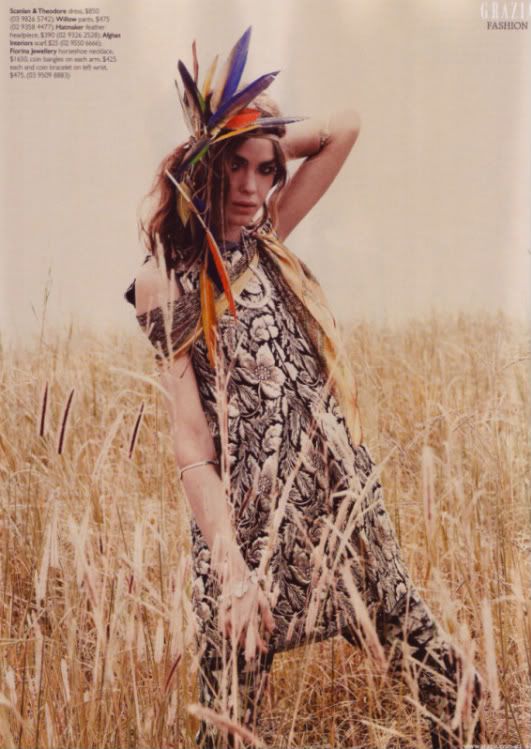
It's been a while since my last tribal fashion roundup back in March, and even longer since I first questioned the emergence of Native themes in fashion back in January. The trends don't seem to be slowing down, and if the prevalence of the hipster headdress is any indication, they might be sticking around for even longer. So there may be an Ultimate Tribal Fashion Roundup July, and August, and September...we'll have to wait and see.

Just to get it out of the way early in the post, or in case you need a refresher, here's why all this is not cool: But Why Can't I Wear a Hipster Headdress?  The Last point is particularly relevant here, so I'll repost:

Well then, Miss Cultural Appropriation Police, what CAN I wear?
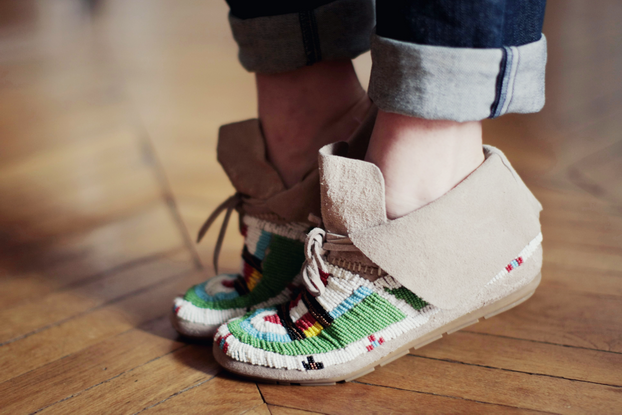
  • If you choose to wear something Native, buy it from a Native. There are federal laws that protect Native artists and craftspeople who make genuine jewelry, art, etc. (see info here about The Indian Arts and Crafts Act). Anything you buy should have a label that says "Indian made" or "Native made". Talk to the artist. Find out where they're from. Be diligent. Don't go out in a full "costume". It's ok to have on some beaded earrings or a turquoise ring, but don't march down the street wearing a feather, with loaded on jewelry, and a ribbon shirt. Ask yourself: if you ran into a Native person, would you feel embarrassed or feel the need to justify yourself? As commenter Bree pointed out, it's ok to own a shirt with kimono sleeves, but you wouldn't go out wearing full kabuki makeup to a bar. Just take a minute to question your sartorial choices before you go out.  
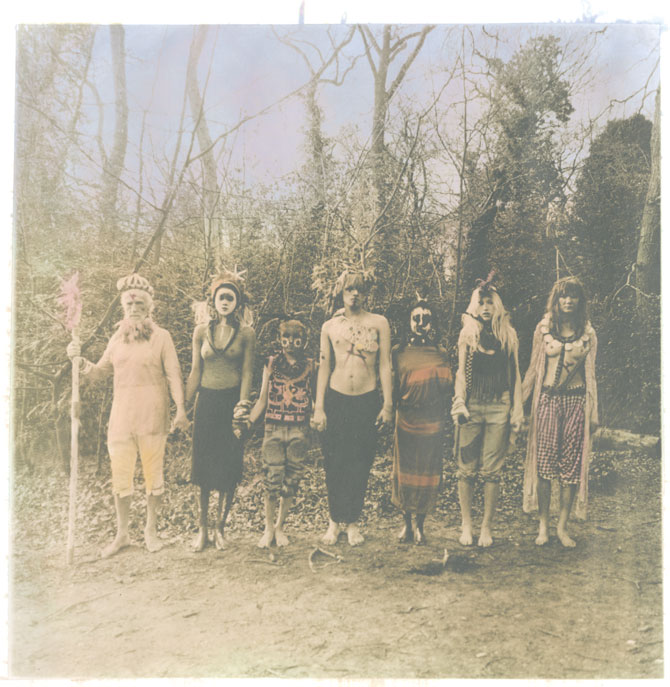
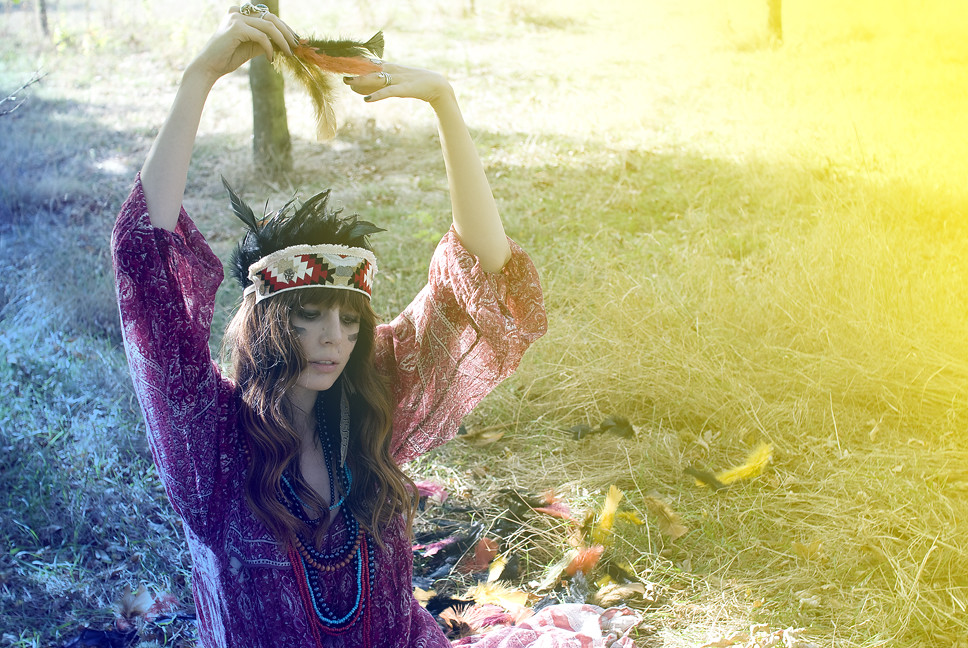
These images are gathered from all walks of fashion and the far corners of the internets. Beneath each photo I've put the source and any other pertinent information. Most of the links have many more photos, but I just picked one or two for you to get the gist of it, so click through for more. Ready? Here we go...


DIY headdress from Bleach Black...it's still not ok even if you make it yourself. sorry. 


American Apparel Look Book

"Dead Man" inspired shoot
(That's that movie with Johnny Depp, right? so they're not calling Natives dead?)

It's invaded accessories too:


(And I had posted this other Hermes Scarf earlier)


Spool 72., which I've also posted about earlier, has even more bags made out of "vintage Native American rugs" on their site now


Kitson e-mail newsletter--Buyers Picks: Tribal Accessories


Window displays at Juicy Couture Manhattan (they had the same ones in SF too)

Headdress T-shirt at Blush in Manhattan

Urban Outfitters "Obey Navajo" Shirt

There are so many more, but hopefully this gives a good overview of some of the stuff out there. I'll try and do some of these roundups a little more often throughout the summer, and as always, continue to send things to me as you see them. 

I've realized this post is sadly devoid of snarky commentary! I'll make up for it in the next one, promise. 

(Thanks to Lici, Tasha, Jesse, Natalie, Katie, Sarah, Mollie, Tanis, Consuelo, Lisa, and anyone else I missed!) 

Tuesday, April 27, 2010

But Why Can't I Wear a Hipster Headdress?

(image from http://www.facebook.com/iamhowlingwolf, which is an entire post in itself. geez.)

I've posted a lot about the phenomenon that is the hipster headdress (see here, here, and here), but I've never really broken it down as to why this trend is so annoying and effed up. A lot of this will be review and is repeated elsewhere on the site, but I thought it was high time I pulled things together into a one-stop-anti-headdress shop. Much of this can also apply to any of the "tribal trends" I feature here, and you can also consider this a follow up to my "Cultural Appropriation Bingo" post. The many sources I drew from are included at the end of this post.

So why can't I wear it? 
  • Headdresses promote stereotyping of Native cultures.
  • The image of a warbonnet and warpaint wearing Indian is one that has been created and perpetuated by Hollywood  and only bears minimal resemblance to traditional regalia of Plains tribes. It furthers the stereotype that Native peoples are one monolithic culture, when in fact there are 500+ distinct tribes with their own cultures. It also places Native people in the historic past, as something that cannot exist in modern society. We don't walk around in ceremonial attire everyday, but we still exist and are still Native.
  • Headdresses, feathers, and warbonnets have deep spiritual significance.
    The wearing of feathers and warbonnets in Native communities is not a fashion choice. Eagle feathers are presented as symbols of honor and respect and have to be earned. Some communities give them to children when they become adults through special ceremonies, others present the feathers as a way of commemorating an act or event of deep significance. Warbonnets especially are reserved for respected figures of power. The other issue is that warbonnets are reserved for men in Native communities, and nearly all of these pictures show women sporting the headdresses. I can't read it as an act of feminism or subverting the patriarchal society, it's an act of utter disrespect for the origins of the practice. (see my post on sweatlodges for more on the misinterpretation of the role of women). This is just as bad as running around in a pope hat and a bikini, or a Sikh turban cause it's "cute".  
    • It's just like wearing blackface.
      "Playing Indian" has a long history in the United States, all the way back to those original tea partiers in Boston, and in no way is it better than minstral shows or dressing up in blackface. You are pretending to be a race that you are not, and are drawing upon stereotypes to do so. Like my first point said, you're collapsing distinct cultures, and in doing so, you're asserting your power over them. Which leads me to the next issue.
      • There is a history of genocide and colonialism involved that continues today.
        By the sheer fact that you live in the United States you are benefiting from the history of genocide and continued colonialism of Native peoples. That land you're standing on? Indian land. Taken illegally so your ancestor who came to the US could buy it and live off it, gaining valuable capital (both monetary and cultural) that passed down through the generations to you. Have I benefited as well, given I was raised in a white, suburban community? yes. absolutely. but by dismissing and minimizing the continued subordination and oppression of Natives in the US by donning your headdress, you are contributing to the culture of power that continues the cycle today.
        But I don't mean it in that way, I just think it's cute!
        • Well hopefully I've illuminated that there's more at play here than just a "cute" fashion choice. Sorry for taking away your ignorance defense. 
        But I consider it honoring to Native Americans!
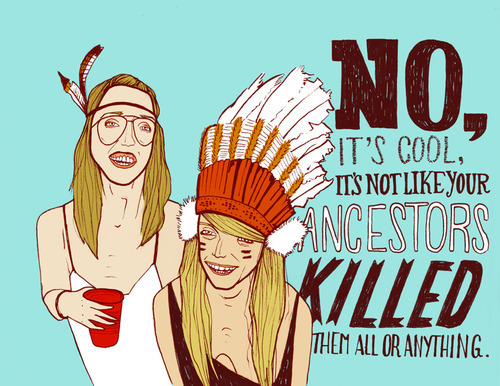
        • I think that this cartoon is a proper answer, but I'll add that having a drunken girl wearing a headdress and a bikini dancing at an outdoor concert does not honor me. I remember reading somewhere that it was also "honoring the fine craftsmanship of Native Americans". Those costume shop chicken feather headdresses aren't honoring Native craftsmanship. And you will be very hard pressed to find a Native artist who is closely tied to their community making headdresses for sale. See the point about their sacredness and significance.
        I'm just wearing it because it's "ironic"!
        • I'm all for irony. Finger mustaches, PBR, kanye glasses, old timey facial hair, 80's spandex--fine, funny, a bit over-played, but ironic, I guess. Appropriating someone's culture and cavorting around town in your skinny jeans with a feathered headdress, moccasins, and turquoise jewelry in an attempt to be ‘counterculture’? Not ironic. If you’re okay with being a walking representative of 500+ years of colonialism and racism, or don’t mind perpetuating the stereotypes that we as Native people have been fighting against for just as long, by all means, go for it. But by embracing the current tribal trends you aren’t asserting yourself as an individual, you are situating yourself in a culture of power that continues to oppress Native peoples in the US. And really, if everyone is doing it, doesn't that take away from the irony? am I missing the point on the irony? maybe. how is this even ironic? I'm starting to confuse myself. but it's still not a defense.
        Stop getting so defensive, it's seriously just fashion!
        • Did you read anything I just wrote? It's not "just" fashion. There is a lot more at play here. This is a matter of power and who has the right to represent my culture. (I also enjoy asking myself questions that elicit snarky answers.) 
        What about the bigger issues in Indian Country? Poverty, suicide rates, lack of resources, disease, etc? Aren't those more important that hipster headdresses?
        • Yes, absolutely. But, I'll paraphrase Jess Yee in this post, and say these are very real issues and challenges in our communities, but when the only images of Natives that Americans see are incorrect, and place Natives in the historic past, it erases our current presence, and makes it impossible for the current issues to exist in the collective American consciousness. Our cultures and lives are something that only exist in movies or in the past, not today. So it's a cycle, and in order to break that cycle, we need to question and interrogate the stereotypes and images that erase our current presence--while we simultaneously tackle the pressing issues in Indian Country. They're closely linked, and at least this is a place to start.   
        Well then, Miss Cultural Appropriation Police, what CAN I wear?
        • If you choose to wear something Native, buy it from a Native. There are federal laws that protect Native artists and craftspeople who make genuine jewelry, art, etc. (see info here about The Indian Arts and Crafts Act). Anything you buy should have a label that says "Indian made" or "Native made". Talk to the artist. find out where they're from. Be diligent. Don't go out in a full "costume". It's ok to have on some beaded earrings or a turquoise ring, but don't march down the street wearing a feather, with loaded on jewelry, and a ribbon shirt. Ask yourself: if you ran into a Native person, would you feel embarrassed or feel the need to justify yourself? As commenter Bree pointed out, it's ok to own a shirt with kimono sleeves, but you wouldn't go out wearing full kabuki makeup to a bar. Just take a minute to question your sartorial choices before you go out.       
        ...and an editorial comment:  I should also note that I have absolutely nothing against hipsters. In fact, some would argue I have hipster-leaning tendencies. In my former San Francisco life, had been known to have a drink or two in the clouds of smoke outside at Zeitgeist, and enjoyed shopping on Haight street. I enjoy drinking PBR out of the can when I go to the dive bars near my apartment where I throw darts and talk about sticking it to 'The Man'. I own several fringed hipster scarves, more than one pair of ironic fake ray-ban wayfarers, and two plaid button downs. I'm also not trying to stereotype and say that all hipsters do/wear the above, just like not every hipster thinks it's cool to wear a headdress. So, I don't hate hipsters, I hate ignorance and cultural appropriation. There is a difference. Just thought I should clear that up.

        This manifesto draws heavily from these awesome posts:

        Friday, April 16, 2010

        The Jezebel Fashion Post that keeps on giving

         (Jen Mussari's now iconic image :) )

        I've come across some awesome blog posts in response to the Jezebel piece (found here) on Native fashion that Lisa at Sociological Images pulled together with images from this blog. The comment thread on the piece was really interesting, with people debating what should be deemed "ok" what is "offensive" and some just telling us all to STFU. I thought I would share a couple of the responses here. (If anyone knows of any others, please let me know)

        Juila at a l'allure garçonnière posted a great response entitled "The Critical Fashion Lover's (basic) Guide to Cultural Appropriation" and it's definitely worth a read. I'm tempted to quote the entire thing. It's beautifully written and insightful. She says:

        " I have heard a lot of arguments that there are way more important things we could be debating instead of cultural appropriation; that native people themselves don't give a shit if a severely intoxicated white hipster decides to tattoo pocahontas on his leg or if some magazine decides their next nude photoshoot should feature blonde women wearing headdresses. who knows! maybe the jingle dress will be the next hot thing in haute couture, but it doesn't impact the quality of life of the people who make, wear and perform in those dresses.

        my response to this is clear and simple; i don't think the issue of institutional racism and discrimination can be completely divorced from the question of cultural appropration. they feed into one another. one would not exist (at least not in the same way) without the other. if we lived in a culture that acknowledged the fact that most of us live on stolen land in north america and that recognized native people as complex, diverse, intelligent people without romanticizing or glamourizing them, i'd like to think that it would put an end to these sorts of reductive stereotypes popping up in fashion, film, music scenes. reducing an entire culture to a simple "inspiration" for your outfit, art project, fashion collection, or photoshoot is disrespectful and unhelpful, especially when we look at the bigger picture."

         And later she addresses what many of the Jezebel commenters were struggling with--what is ok to wear and what isn't?
        the biggest problem with the concept of cultural appropriation, in my opinion, is that it doesn't set out any explicit black and white rules for people to follow. as you can see based on the comments on jezebel, people are genuinely confused as to what the "right thing" to do in these situations are, and there's nothing wrong with that. you can't get answers if you aren't asking questions. my advice in these situations is largely about context, intention, and education.
        She was able to put into words many of the issues I was struggling with after reading the comment chain. great stuff.

        Another post came from Molly at the University of Michigan Arts Ink blog, entitled "The Hipster Headdress: A Fashion Faux Pas." The post itself is great, but I really appreciated the back-and-forth she posted in the comments between her and some facebook friends. It's really enlightening and says a lot:
        Friend 3: …great opinionated synopsis molly, really like your writing style and i agree with the feathered headdress as a stupid hipster clique. Although to be honest, I sometimes wear a feather in my hair (completely in humble respect to the Native Americans)…a modest little decorative item once in awhile.

        Molly: I think moccasins are items of comfort – though I realize there are “designer moccasins” out there selling for hundreds of dollars. You don’t put on a headdress because you lost your baseball cap. They’re not practical or comfortable. Plus, you can wear moccasins and walk down the street, go to a party, and nobody would really notice. I don’t know why people wear headdresses around, but whether or not it’s their intention – they get attention. I realize throwing in that P.S. is rather hypocritical regardless, but perhaps the note’d make more sense taking into account that Native Americans, at powwows, posts, what have you, might sell moccasins or dream catchers or other crafts – but you never see them selling headdresses (unless for ceremonial purposes, I suppose, but I’ve never seen a headdress for sale personally, at least). I found a hawk feather and wore it around for a little while. I don’t think single feathers are offensive, though I know that’s again flirting with contradiction. It’s like the difference between wearing some green eyeshadow or painting your entire body green. Also, I’m not insinuating that anyone who enjoys wearing headdresses occasionally is absolutely void of morals. I’m just not a fan.

        Thanks to both of you for keeping the conversation going, I'm just so glad these issues are being discussed in the blog-o-sphere after remaining off the map for so long. Keep up the good work!


        Julia's post: http://alagarconniere.blogspot.com/2010/04/critical-fashion-lovers-basic-guide-to.html

        Molly's post: http://www3.arts.umich.edu/ink/2010/04/14/the-hipster-headdress-a-fashion-faux-pas/

        The original Jezebel post: http://jezebel.com/5516362/feathers-and-fashion-native-american-is-in-style